15 Oct 2026
How Emerging Tech Platforms Are Redefining Overlaps Between Athletic Competitions and Entertainment Venues
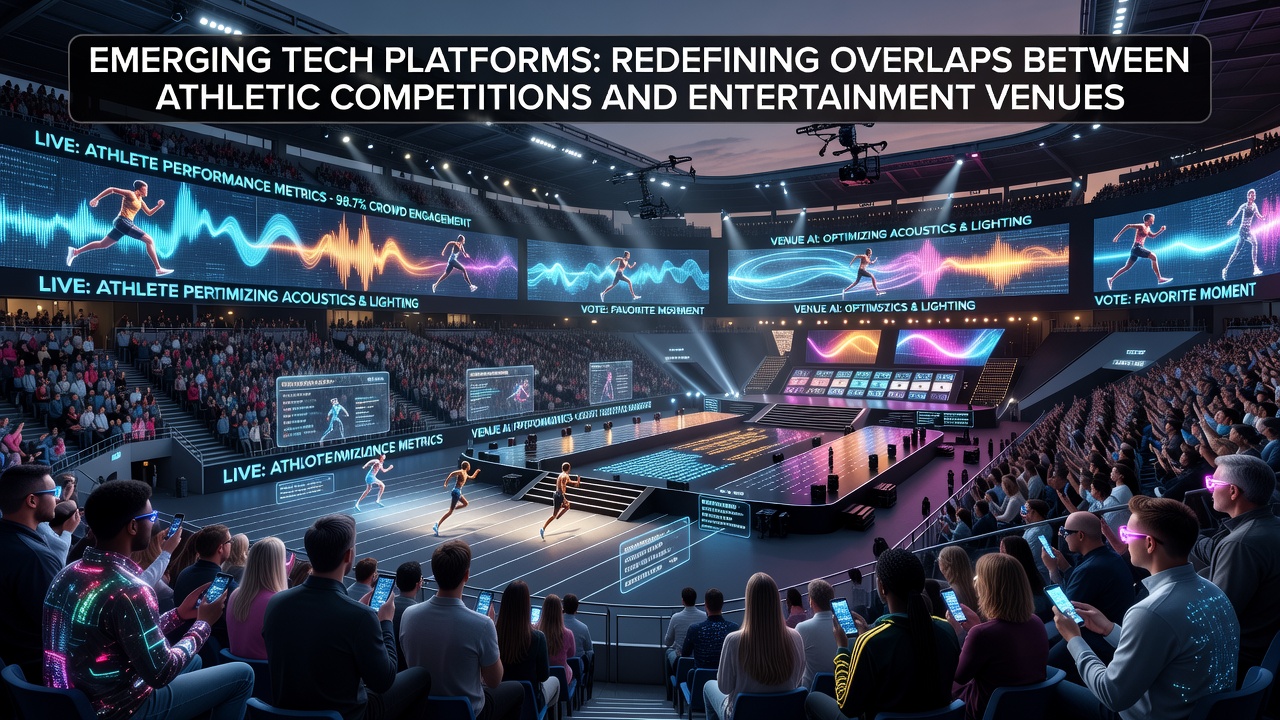
Emerging tech platforms continue to reshape how athletic competitions intersect with entertainment venues, creating integrated experiences that blend physical events with digital enhancements. Research from institutions across multiple regions shows that tools such as augmented reality overlays, virtual production systems, and AI-driven personalization now extend audience reach beyond traditional stadium walls while altering how venues operate during live events.
Augmented and Virtual Interfaces Expand Venue Boundaries
Stadiums and arenas incorporate augmented reality applications that allow attendees to access real-time player statistics, historical footage, and interactive replays through mobile devices or on-site displays. Data from the Australian Sports Commission indicates that venues adopting these systems report increased dwell times and higher engagement metrics during multi-day athletic festivals. Virtual reality platforms meanwhile enable remote participants to enter simulated environments modeled after physical venues, where they observe competitions from customizable perspectives that mimic premium seating arrangements.
These interfaces connect athletic programming directly to broader entertainment formats, including live music performances and theatrical productions staged within the same facilities. Observers note that hybrid calendars now schedule athletic events alongside concerts and digital art installations, with shared technological backbones handling ticketing, crowd flow, and content delivery across both categories.
Artificial Intelligence Personalizes Cross-Format Experiences
AI systems analyze participant behavior patterns to deliver tailored content streams that merge athletic highlights with entertainment segments. Platforms deployed in North American and European venues use machine learning models trained on attendance data to predict which fans prefer extended post-event digital access, such as behind-the-scenes athlete interviews or virtual venue tours. Studies conducted by research groups at Canadian universities reveal that these predictive tools improve retention rates when athletic competitions transition into entertainment programming within the same physical space.
Venues employ computer vision to monitor real-time crowd dynamics, adjusting lighting, sound, and digital signage to maintain consistent atmosphere across different event types. This capability supports seamless shifts from daytime athletic competitions to evening entertainment productions without requiring separate infrastructure investments.
Streaming Ecosystems and October 2026 Projections
Global streaming networks now aggregate live athletic feeds with synchronized entertainment elements, allowing viewers to switch between competition angles and supplementary narrative content. Industry reports project that by October 2026, integrated platforms will handle simultaneous broadcasts of major athletic series alongside companion entertainment streams, using edge computing to reduce latency across international audiences. Those monitoring infrastructure developments note that bandwidth improvements scheduled for late 2026 will further enable venues to host concurrent physical and virtual events without performance degradation.
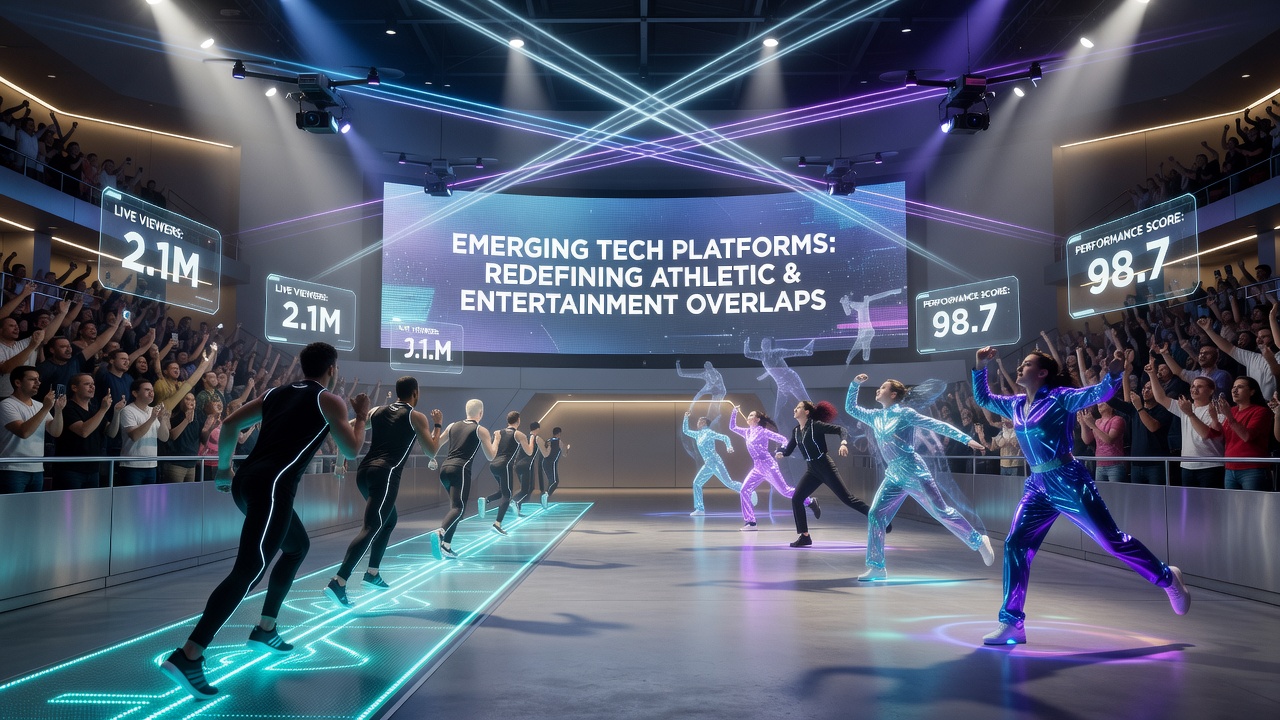
Esports competitions increasingly occupy traditional athletic venues, where digital stages replace physical fields during off-seasons. These events utilize the same lighting grids, seating arrangements, and acoustic systems originally designed for conventional sports, demonstrating how entertainment technology repurposes existing athletic infrastructure.
Data Integration Across Physical and Digital Realms
Sensor networks embedded in venues collect biometric and movement data from athletes that feeds into both competition analytics and entertainment storytelling modules. European research consortia have documented cases where this shared data pool supports narrative arcs for entertainment productions while informing training adjustments for athletic teams. The result appears in unified dashboards that venue operators use to coordinate everything from security protocols to content licensing across event categories.
Platform providers now offer modular software suites that athletic organizations and entertainment companies license jointly, reducing duplication in areas such as access control and audience measurement. Figures released by trade associations in Asia-Pacific markets show rising adoption of these unified systems, particularly in facilities that alternate between sports tournaments and large-scale concerts throughout a single calendar year.
Conclusion
Tech platforms continue to dissolve distinctions between athletic competitions and entertainment programming by supplying common tools for visualization, personalization, and distribution. Venues that implement these systems gain flexibility to host diverse lineups while maintaining operational efficiency, and audiences receive expanded access through both on-site and remote channels. Data patterns emerging from multiple regions point toward further convergence as infrastructure upgrades scheduled through 2026 come online, supporting more fluid transitions between event formats within shared physical and digital spaces.